

HONOR Layering School: the complete system guide
Anvar Rakhimov
HONOR lead equipment expert and head of the Layering School
14 years of active hunting and winter fishing in Kazakhstan, 6 years of outdoor equipment field tests and 4 years with HONOR. Field testing at −40…+40 °C.
Published · updated
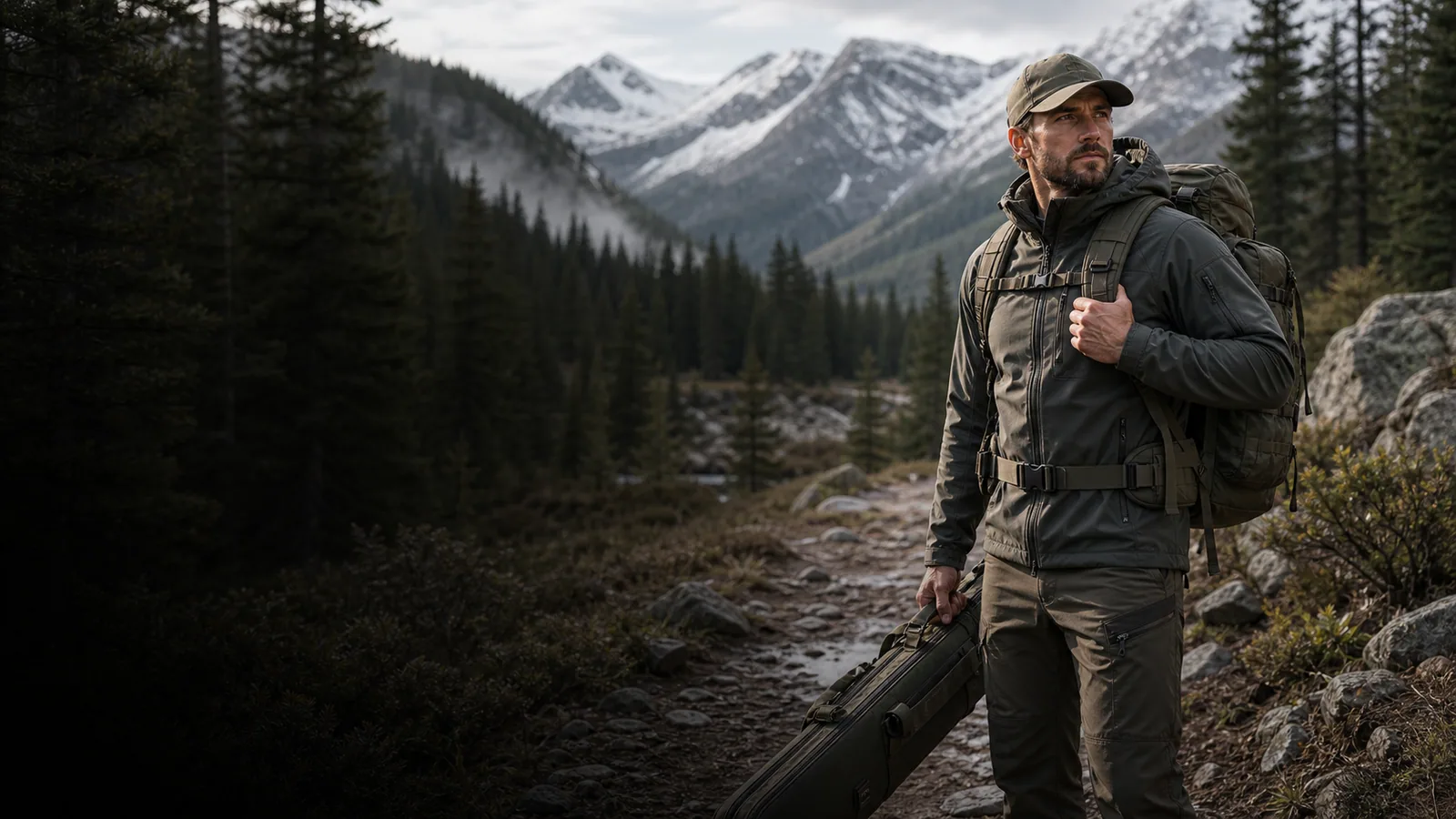
A layering system combines 3–5 garments like building blocks, each with one task: the base layer moves sweat away, the mid layer retains warmth, and the outer layer protects against wind and precipitation. Together they work at any temperature from +30 to −40 °C. Below we explain each layer, temperature ranges and ready-made HONOR kits for your activity.
Why use a layering system?
Three thin layers keep you warmer than one thick jacket and adapt to the weather. Outdoor equipment manufacturers have demonstrated and confirmed this for 30 years: SITKA Gear, KUIU, First Lite and REI all build their collections around the same principle.
Here is how it works. Your body produces heat and sweat. One thick jacket traps both: sweat accumulates on your skin and you become wet. At a stop, wet skin cools twice as fast as dry skin. After 15–20 minutes you are cold, even in a jacket “rated to −30 °C”.
A layering system solves this by separating tasks:
- The base layer touches the skin and moves sweat outwards, keeping the skin dry.
- The mid layer traps warm air between itself and the base layer, creating insulation.
- The outer layer blocks wind and precipitation while releasing vapour from within.
Each layer can be removed or added in 30 seconds. Hot on the approach? Remove insulation. Cold at a stop? Put on a down vest. A single jacket cannot do that.
Five HONOR layers: L1–L7 + accessories
HONOR uses an extended seven-layer classification: L4–L6 are different types of protection, while L7 is dedicated stationary insulation for activities without movement, such as hide hunting and winter fishing.
| Layer | HONOR name | Purpose | Product categories |
|---|---|---|---|
| L1 | Base | Move moisture away from skin | Thermal underwear, long-sleeve tops |
| L2 | Active warmth | Breathable warmth while moving | Fleece and jumpers |
| L3 | Insulation | Compact warmth at stops | Insulated vests, lightweight down jackets |
| L4 | Wind protection | Blocks wind while breathing | Lightweight windbreakers |
| L5 | Softshell | Protection from wind and light drizzle | Mid-season jackets, clothing sets |
| L6 | Nord protective layer | Keeps rain and snow out, lets vapour escape | Jackets and clothing sets with NORD™ technology |
| L7 | Extreme stationary warmth | Warmth during hours without movement | ARCTIC winter sets, WINTER |
| A | System accessories | Head, hands, feet | Thermal socks, gloves, hats, footwear |
A product can fulfil one or several roles depending on the activity. For example, the HONOR NOMAD PRO jacket serves as L5 in the mid-season and L6 when enhanced with NORD™ technology.
10 principles behind the whole system
The combined principles of four global schools — SITKA, KUIU, First Lite and REI — adapted to Kazakhstan’s climate.
| № | Principle | What it means in practice |
|---|---|---|
| 1 | Moisture is enemy No. 1; cold is the consequence | Sweat → get cold. Manage sweat first, then warmth |
| 2 | The base layer matters more than the jacket | A wet T-shirt under a jacket defeats any insulation |
| 3 | No cotton in the field | Cotton absorbs 27 times its weight in water and does not dry. Leave it for the city |
| 4 | Insulation can be active or stationary | Fleece is for walking. Down is for the hide. They are different tools |
| 5 | Dress for activity, not the thermometer | Climbing at −10 °C feels like +5. In a hide, +5 feels like −10 |
| 6 | Wind steals heat faster than frost | A 5 m/s wind makes −10 °C feel like −18 °C. Wind protection costs less than extra down |
| 7 | Remove layers BEFORE sweating and add them BEFORE shivering | The 15-minute rule: start slightly cool and remove a layer before climbing |
| 8 | Each layer should be slightly looser than the previous one | Compressed insulation does not warm you. Size up the outer layer by 1 with two layers beneath |
| 9 | Heat escapes through the extremities | Cold feet and hands are not the jacket’s fault. Socks, gloves and a hat belong to the system |
| 10 | A down jacket and rainwear are insurance in every season | Keep them in the backpack. Put them on at the very first stop |
Dressing for temperature and activity
This is the main table worth saving. It gives a starting set of layers for the conditions. Make the final selection according to wind, precipitation and outing duration.
| Temperature | High activity (moving) | Moderate (variable) | Low (waiting, hide hunting) |
|---|---|---|---|
| +25…+40 °C | Lightweight L1 + cap | L1 + L4 windbreaker for the evening | L1 + L2 fleece (shade, overnight stop) |
| +10…+25 °C | Lightweight L1 | L1 + L2 fleece | L1 + L2 + L4 |
| 0…+10 °C | L1 + L2 + L4/L5 | L1 + L2 + L5 + L3 in the backpack | L1 + L2 + L3 + L5 |
| −10…0 °C | Warm L1 + L2 + L5 | L1 + L2 + L5/L6 | L1 + L2 + L3 + L7 |
| −25…−10 °C | Warm L1 + thick L2 + L6 | L1 + L2 + L3 + L6 | L7 set + warm L1 + L2 |
| −40…−25 °C | L1 + L2 + L3 + L6 + hat/mittens | Not recommended — stay stationary or seek shelter | L7 ARCTIC + the full layering system + footwear and accessories |
Adjusting for Kazakhstan’s climate
American guides were written for the Rocky Mountains and the Midwest. Kazakhstan’s climate calls for four adjustments:
- A sharply continental climate: −40 °C in winter, +40 °C in summer. Customers need two complete systems a year plus mid-season layers. HONOR sells a year-round system wardrobe, not “one item for the season”.
- Steppe wind is constant, not occasional. A windproof layer (L4/L5) is essential on the steppe, like rainwear in SITKA’s mountain system. A neck gaiter and hood are part of the layer, not an accessory.
- Dry frost in most regions. Down works better than in humid US states. Near water — Balkhash, the Ili and the Irtysh — and during thaws, however, use the synthetic rule: PrimaLoft-type insulation rather than down.
- Winter fishing is a widespread activity at −20…−40 °C. It is the main use for stationary layer L7, a market barely covered in American guides. HONOR’s strength is sets with a verified rating down to −40 °C (ARCTIC range) and the footwear system, since heat escapes through the ice.
Ready-made systems for each activity
A system assembled for a specific task works better than a collection of separate items. HONOR has prepared nine ready-made systems, each in three equipment levels: basic, optimal and maximum.
| Activity | Temperature range | Key layers | Where to look |
|---|---|---|---|
| Winter fishing (ARCTIC) | −40…−15 °C | L7 ARCTIC + warm L1 + TERRA footwear | ARCTIC range → |
| Hide hunting | −30…−10 °C | L7 winter set + L1 + L2 + L3 | Winter sets → |
| Active hunting | −5…+10 °C | L1 + L2 + mid-season L5 | NOMAD range → |
| Mountain hunting, trekking | −5…+15 °C | Lightweight L1 + L2 + L5 + L3 in the backpack | Vests and insulation → |
| Open water, boat fishing | 0…+15 °C | L6 top + bottoms with NORD™ + L1 + L2 | HORIZONT range → |
| Summer expedition | +15…+40 °C | Lightweight L1 ×2 + L4 for the evening | SUMMER range → |
| First ice | −15…0 °C | Warm L1 + L2 + winter L5/L6 | WINTER range → |
| Beginner’s starter system | −10…+10 °C | L1 + L2 + versatile L5 | Kit builder → |
| Versatile mid-season system | −10…+15 °C | L1 + L2 + L5 | Choose by temperature → |
Each system uses only products currently available in your size. Swap within a layer without losing the discount.
Common mistakes when building a kit
This list is based on HONOR’s return-reason data from its first year of operation.
- A set, but no base layer. You bought a winter set for 130 000 ₸ and wore a cotton T-shirt over thermal underwear or no thermal underwear at all. An hour into a stop, your shoulders and chest are cold. Cotton collects sweat and becomes a wet compress.
- Saving on footwear. A set rated to −35 °C, but boots “rated to −10 °C from a sale”. After 3 hours motionless on ice, warmth escapes through the thin sole. The right footwear system means boots rated ≥ your conditions + thermal socks + a dry base layer.
- A set exactly your size. You want a “close fit”. Two layers under the jacket get compressed and stop warming you. Rule: choose an outer layer 1 size larger when wearing two layers beneath.
- One set for every season. “I already have a winter set; that will do.” At +5 °C you will sweat within an hour and then get cold at a stop. One set suits one type of weather. A layering system covers four seasons.
- “Fashionable camouflage” instead of quiet fabric. Stalk in a rustling protective layer and an animal hears you before seeing you. Active hunting needs fabric with Silent Move™ or Nomad Fit™ technology.
Where to go next
If you are new and unsure where to start, use the gear finder with an adviser. They will clarify your conditions and build a system from available products. Experienced customers can go straight to their activity:
- Winter without movement → ARCTIC sets and WINTER
- Stalking → NOMAD range
- Mountains, hiking → vests and insulation
- Rain, open water → HORIZONT range
- Summer, steppe → SUMMER range
For a deeper look at individual layers, read the detailed Layering School articles:
- Base layer: which thermal underwear to choose
- Mid layer: fleece and insulation
- Why your feet get cold when fishing and what to do
- Outer layer: protection from wind and water — coming soon
- Equipment care — coming soon
Frequently asked questions
- Are three thin layers really warmer than one thick jacket?
- Yes. Dry air remains between layers, and it is the best insulator. Three thin garments create three air layers; one thick jacket creates one. Layers can also be removed and added, unlike the jacket.
- Do I have to use all 5–7 layers?
- No. The minimum is 2 layers: base + protection. The full set is only needed in extreme conditions, such as a hide at −30 °C or winter fishing. A summer hike needs only L1 + L4, a lightweight windbreaker. The system is flexible.
- Can I mix brands within one system?
- Technically yes, but HONOR tests layer compatibility within its ranges. For example, a NOMAD jacket and NOMAD vest are designed to be worn together with the right sizing allowance. Mixing brands may create compression or gaps.
- How much does a complete system cost?
- A HONOR beginner’s starter system starts at 98 000 ₸ (basic level, 3 items). An optimal winter system for hide hunting starts at 215 000 ₸. The flagship ARCTIC starts at 345 000 ₸. A kit costs less than buying items separately.
- What if I have bought only one layer?
- One layer is a beginning. HONOR helps complete the system by season: 30 days after buying the first item, you receive recommendations for layers missing for your activity, with a fixed price for the next 60 days.
- How do I size the outer layer when wearing two insulating layers underneath?
- Use the +1 size rule. If you normally wear L and plan thermal underwear + fleece + a vest beneath the jacket, choose XL. Compressed insulation loses up to 40 % of its insulating ability. HONOR size selection accounts for this using your height and body measurements.
Read next
Updated · prepared by the HONOR expert team. Temperature ratings are based on product information.